Singapore stands as a global beacon for career opportunities, blending cutting-edge innovation with a stable economy that attracts immigrants from around the world. As of 2025, the city-state’s job market continues to thrive, driven by its position as a financial hub, technological powerhouse, and strategic trade center in Asia. With a population of over 6 million, more than 40 percent are non-residents, highlighting the country’s reliance on foreign talent to fuel growth in key sectors. For immigrants, Singapore offers a welcoming environment with efficient public transport, world-class healthcare, and a multicultural society where English is widely spoken.
However, securing a job here requires navigating specific immigration rules. The Ministry of Manpower (MOM) oversees work passes, ensuring that foreigners fill genuine skill gaps without displacing locals. The primary visa for professionals is the Employment Pass (EP), which targets managers, executives, and specialists earning at least S$5,600 per month (higher at S$6,200 for the financial sector). Mid-skilled workers may qualify for the S Pass (minimum S$3,300), while semi-skilled roles fall under the Work Permit, often for construction or manufacturing. In 2025, updates include raising the maximum employment age for Work Permit holders to 62 and introducing bonus points under the COMPASS framework for those in shortage occupations.
The 2025 Shortage Occupation List (SOL), released by MOM, identifies 30 high-demand roles across seven industries, offering immigrants a competitive edge. These jobs not only promise visa sponsorship but also faster processing and higher approval rates. Beyond SOL, sectors like hospitality and e-commerce remain open to foreigners. Salaries are competitive, with averages ranging from S$3,000 for entry-level roles to over S$15,000 for senior positions. Cost of living is high (around S$4,000 monthly for a single person), but tax rates are low (0-22 percent), and benefits often include housing allowances.
This guide explores these opportunities in detail, listing and explaining key jobs by sector. Whether you are a tech whiz, healthcare expert, or green economy innovator, Singapore’s merit-based system rewards skills and experience. With unemployment below 2 percent, 2025 presents an ideal time to build a rewarding career here.
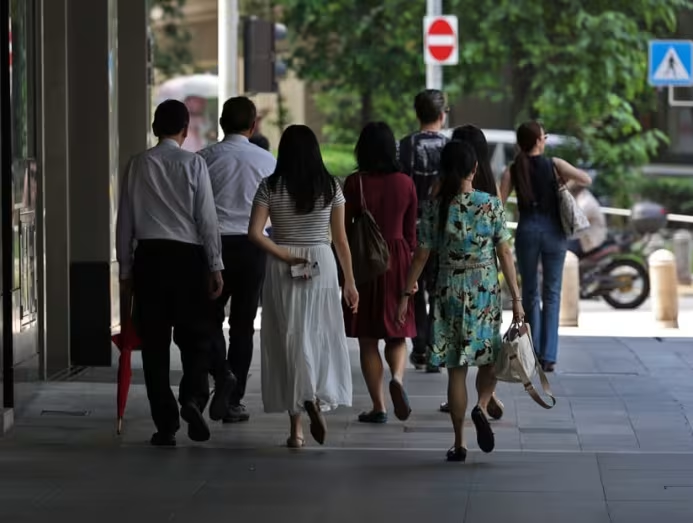
Key Job Opportunities for Immigrants
Singapore’s job market prioritizes sectors aligned with national goals like digital transformation, sustainability, and healthcare resilience. Below, we delve into the top sectors, highlighting representative jobs from the SOL and beyond. Each includes a description of duties, entry requirements, salary expectations (based on 2025 market data), and tips for immigrants.
Infocomm Technology (ICT) Sector
The ICT sector dominates, contributing over 17 percent to GDP and employing nearly 200,000 professionals. With cyber threats rising 20 percent annually and AI adoption surging, demand for digital talent outstrips supply. Immigrants, especially from India, China, and the US, fill 60 percent of roles, often with EP sponsorship.
- Software Developer Software developers design, code, and maintain applications, from mobile apps to enterprise systems. Daily tasks include writing algorithms in languages like Python or Java, debugging code, collaborating with teams via Agile methods, and integrating AI features. In Singapore, they contribute to fintech apps or smart city projects. Requirements: Bachelor’s in computer science or related field; 2-5 years experience; proficiency in cloud tools like AWS. SOL status grants 10 COMPASS points. Salary: S$5,500-S$9,000 monthly, plus bonuses up to 20 percent. For immigrants: Highlight GitHub portfolios; firms like Grab or DBS sponsor EPs readily.
- Cybersecurity Architect These experts build secure network infrastructures, assessing vulnerabilities, implementing firewalls, and developing incident response plans. They analyze threats using tools like SIEM systems and ensure compliance with PDPA data laws. Requirements: Degree in cybersecurity; certifications like CISSP; 5+ years in threat modeling. High demand due to 2025’s cybercrime spike. Salary: S$8,000-S$14,000, with stock options. For immigrants: Emphasize global experience; roles at Singtel or government agencies prioritize SOL candidates.
- Data Scientist Data scientists extract insights from big data using machine learning models, forecasting trends for businesses. Tasks involve cleaning datasets with Pandas, building predictive models in R, and visualizing results via Tableau. Requirements: Master’s in data analytics; skills in SQL and TensorFlow; 3+ years. SOL inclusion boosts EP odds. Salary: S$7,000-S$12,000, often with remote flexibility. For immigrants: Showcase Kaggle competitions; tech giants like Google Singapore hire aggressively.
- Cloud Architect Cloud architects design scalable infrastructures on platforms like Azure, migrating legacy systems and optimizing costs. They handle hybrid cloud setups for e-commerce scalability. Requirements: AWS/GCP certification; engineering degree; 4+ years. Salary: S$9,000-S$15,000. For immigrants: Certifications fast-track applications; demand in banking sector.
Healthcare Sector
Aging population and post-pandemic recovery drive healthcare’s 5 percent annual growth. Foreign nurses and therapists comprise 30 percent of staff, with pathways to permanent residency after three years.
- Registered Nurse Registered nurses provide patient care, administering medications, monitoring vitals, and educating families in hospitals like Singapore General. Specialties include oncology or ICU. Requirements: Nursing diploma/degree; state registration; 2+ years. SOL covers 20+ titles like Nurse Clinician. Salary: S$4,000-S$7,500, with shift allowances. For immigrants: Pass SNB exam; sponsorship common in private clinics.
- Physiotherapist Physiotherapists assess injuries, design rehab programs, and use techniques like ultrasound therapy to restore mobility. They work in sports clinics or eldercare. Requirements: Bachelor’s in physiotherapy; Allied Health license; 3+ years. Salary: S$4,500-S$8,000. For immigrants: Focus on manual therapy skills; high demand in rehab centers.
- Diagnostic Radiographer These professionals operate X-ray/MRI machines, positioning patients and interpreting images for diagnoses. Requirements: Radiography degree; AHPC registration; experience in digital imaging. Salary: S$4,200-S$6,500. For immigrants: Radiology certifications from home country help; roles in public hospitals.
Financial Services Sector
As Asia’s wealth capital, finance employs 200,000, with 40 percent foreigners. Ultra-high-net-worth migration fuels advisory roles.
- Financial or Investment Advisor (High Net Worth) Advisors tailor portfolios for wealthy clients, analyzing markets, recommending bonds/stocks, and managing family offices. Requirements: Finance degree; CFP certification; 5+ years with HNW clients. Salary: S$10,000-S$20,000 base + commissions. For immigrants: Network via CFA events; firms like UBS sponsor EPs.
- Relationship Manager (Family Office) Managers build client trust, coordinating philanthropy and estate planning for ultra-rich families. Requirements: MBA; wealth management experience. Salary: S$12,000-S$25,000. For immigrants: Bilingual skills (Mandarin) advantageous; SOL eases entry.
Green Economy Sector
Singapore’s net-zero 2050 goal creates 10,000 jobs yearly in carbon trading and sustainability.
- Carbon Project Manager Managers develop carbon credit projects, from feasibility studies to verification under global standards. Requirements: Environmental science degree; project management cert; 4+ years. Salary: S$7,000-S$11,000. For immigrants: ESG experience key; roles at Sembcorp.
- Carbon Trader Traders buy/sell carbon credits on exchanges, hedging risks and forecasting prices. Requirements: Finance background; trading license. Salary: S$8,500-S$13,000 + bonuses. For immigrants: Commodities trading history; emerging market.
Semiconductor Sector
With investments topping S$20 billion, this sector needs engineers for chip fabrication.
- Semiconductor Engineer Engineers design circuits, test wafers, and optimize production lines at fabs like GlobalFoundries. Requirements: Electrical engineering degree; cleanroom experience. Salary: S$6,000-S$10,000. For immigrants: VLSI certification; high EP approval.
- Process Engineer They refine manufacturing processes, troubleshooting yields and implementing automation. Requirements: Chemical engineering; 3+ years. Salary: S$5,800-S$9,500. For immigrants: Focus on yield optimization.
Agritech Sector
Food security initiatives boost this nascent field.
- Alternative Protein Food Application Scientist Scientists develop plant-based meats, testing formulations for taste and nutrition. Requirements: Food science PhD; lab experience. Salary: S$6,500-S$10,000. For immigrants: Biotech background; roles at startups.
Maritime Sector
Port activities generate steady demand.
- Marine Superintendent Superintendents oversee vessel maintenance, crew safety, and compliance. Requirements: Nautical degree; sea time. Salary: S$8,000-S$12,000. For immigrants: STCW certification.
Other Sectors: Hospitality and E-Commerce
Beyond SOL, hospitality hires for tourism rebound (15 million visitors expected).
- Hotel Receptionist Greeting guests, handling check-ins, and resolving queries in 5-star hotels. Requirements: Diploma in hospitality; multilingual. Salary: S$2,500-S$3,500 + tips. For immigrants: S Pass common.
- E-Commerce Specialist Managing online platforms, optimizing SEO, and analyzing sales data for Shopee-like firms. Requirements: Marketing degree; digital tools. Salary: S$4,000-S$6,500. For immigrants: E-commerce portfolio.
READ ALSO: Australia Jobs for Skilled Immigrants – Work In Australia
FAQs
What documents do I need for a Singapore work visa?
To apply for a Singapore Employment Pass (EP), you need a valid job offer from a Singapore-registered company, a passport with at least six months’ validity, your educational certificates, transcripts, a detailed resume, and recent passport-sized photos. The employer submits the application through the Ministry of Manpower’s (MOM) EP Online portal, and processing usually takes 3 to 8 weeks. Applicants must meet the minimum qualifying salary of S$5,600 per month in 2025, or higher for senior roles and older applicants. Additional documents may be requested for verification.
Can I bring my family on a work visa?
Yes, holders of the Employment Pass can sponsor their immediate family members through Dependant’s Passes (for legally married spouses and children under 21) or Long-Term Visit Passes (for common-law partners, stepchildren, or parents). Dependants can study in Singapore, and spouses may apply for separate work authorization under a Letter of Consent or their own work pass.
How long does a work pass last?
Employment Passes are typically issued for one to two years initially and can be renewed for up to three years each time. Renewals depend on continued employment, salary level, and compliance with MOM regulations. Occupations listed on Singapore’s Shortage Occupation List (SOL) may receive longer validity and faster renewals.
What if my job isn’t on the SOL?
If your role is not on the Shortage Occupation List, you can still apply for a standard Employment Pass as long as you meet the salary and qualification criteria. The Ministry of Manpower evaluates applications based on employer reputation, candidate experience, and education alignment. For mid-skilled roles with lower salaries, the S Pass is an alternative, though it has stricter quotas and levies for employers.
Is English proficiency required?
Yes, since English is Singapore’s main business and administrative language. While there is no formal English test requirement, employers expect strong written and verbal communication skills. Fluency significantly improves your chances in interviews and professional settings, especially in multinational firms and client-facing roles.
How competitive is the job market for immigrants?
The Singapore job market is highly competitive, particularly in sectors like finance, technology, and professional services. However, skilled foreign professionals with in-demand expertise in areas such as AI, cybersecurity, green technology, and healthcare remain in high demand. Networking is key—use platforms like LinkedIn, JobsDB, JobStreet, and attend professional meetups or chamber events to connect with employers.
What are housing options for newcomers?
Newcomers can rent HDB flats for between S$2,500 and S$4,000 per month, depending on location and size, or choose private condominiums for more amenities, typically costing S$4,000 to S$8,000 monthly. Some employers offer temporary housing or relocation allowances during your first few months. It’s advisable to sign short-term leases initially until you are familiar with neighborhoods, transport links, and amenities.
Can I switch jobs on an Employment Pass?
Yes, Employment Pass holders can change employers, but the new company must apply for a fresh EP before you start work. The previous pass must be canceled by the former employer once your new EP is approved. In 2025, there is no cooling-off period, meaning you can transition directly without leaving the country. However, ensure a clean employment record and compliance with MOM regulations to avoid delays in approval.